
Right, let’s talk about how brains work 🧠
If you’re a designer and you’re here, then you must know that everything we design is for people. But how do we
design something that people love?
Easy-peasy, by knowing what they actually love. But how do we do that?
Before going any further, do you recall that subconscious mind, cerebellum from your 8th-grade?
No? Let me remind you very quickly.
Subconscious Mind [noun] — /ˌsʌbˈkɑːn.ʃəs maɪnd /
“ the part of your mind that notices and remembers information when you are not actively trying to do so, and influences your behaviour even though you do not realize it: Ex. Breathing, Heartbeat, Emotions, etc.”
Now, since the context is set.
Let’s dive in. We already know UX Design is all about the user-centric approach, but how is it relevant to the subconscious mind, you might ask.
I agree, let’s answer a quick rapid fire.
- What’s your preferred hand?
- How do you know to stop on a red signal?
- Who told you greens are nothing but leafy vegetables?
- How do you turn off your mobile screen?
- How do you capture a photo on your smartphone camera?
- How do you know how gestures like tap, swipe, hold, etc. would work?
- How do you know if a button is clickable?
Yep. I know, that’s pretty easy.
Let’s dive deeper into each of these questions, and your answers.
1. What’s your preferred hand?
If you have to pick a pen to write something, your preferred hand will come into the picture without your knowledge. How did that happen?
2. How do you know to stop on a red signal?
Of course, you might say it’s part of your state’s traffic rules. Even if there is no rule, you would stop without knowing, don’t you agree?
3. Who told you greens are nothing but leafy vegetables?
“Argh, I’m on diet. I’m taking only greens these days”.
Your brain has the ability to connect colors with objects and emotions. In this case, Green is connected to nature and the only nature you could eat is leaves. But who made all these calculations?
4. How do you turn off your mobile screen?
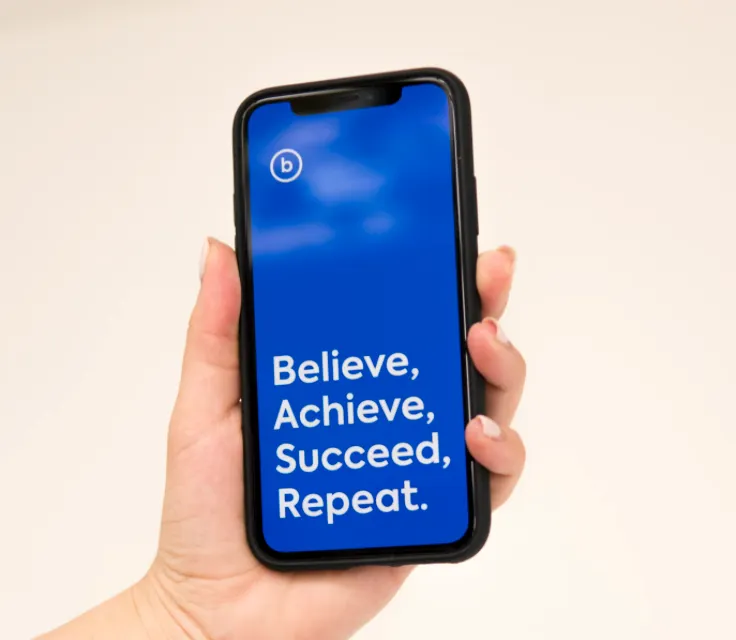
When it’s time to lock your smartphone screen, your finger slides through the power button without your knowledge, who you do think gave those exact instructions?
5. How do you capture a photo on your smartphone camera?
The big fat white circle. Yes, any phone with a camera app on it would have this big fat button in the center, and people without a second thought would know its purpose on screen without any training.
6. How do you know how gestures like tap, swipe, hold, etc. would work?
Not so long ago, we used to have a mobile with buttons but now it's rare to find one. Yes, smartphones conquered space. With the smartphone being a full touch screen with no buttons, gestures played a critical role in accessing the features of a smartphone. But who trained you how to use that gesture?
7. How do you know if a button is clickable?
A lot of information on your mobile screen, but you know where to tap to move forward. How is that possible?
Aligning design to the Subconscious Mind
Hold tight, if you already know some of NN Heuristics and UX Laws, you’re already half-filled at this point.
This alignment of design to the subconscious mind is not a new concept. Not so long ago, a few people came together and coined a word called U ser Experience Design (UXD). UXD focuses on key areas of the human brain & behavior which helps in crafting seamless product experiences and aligning designs with their subconscious goals.
So, you and I are doctors now?
Nope, maybe wizards sort of. With us in the world, people will never know we exist as long as they’re happy with what we gave.
“A good design is never questioned,
a bad design is never an answer”
Based on how the subconscious memory works, the great masters have defined some standards that help younger generations learn and execute them in no time. Out of which, widely known standards are “ NN Heuristics ” and “ Laws of UX ”. Both are inclined towards aligning the design to how humans perceive information.
To give you a glimpse of it, here are a few of them:
-
**Visibility of system status:
**The design should always keep users informed about what is going on, through appropriate feedback within a reasonable amount of time. Open and continuous communication develops trust in the product as well as the brand. -
Consistency & Standards:
Users should not have to wonder whether different words, situations, or actions mean the same thing. Follow platform and industry conventions. -
Match between system and the real world:
The design should speak the users’ language. Use words, phrases, and concepts familiar to the user, rather than internal jargon. Follow real-world conventions, making information appear in a natural and logical order. -
[Law]
The Von Restorff effect:
Also known as “The Isolation Effect”, predicts that when multiple similar objects are present, the one that differs from the rest is most likely to be remembered. -
[Law]
Zeigarnik
effect:
As per this UX law, people remember uncompleted or interrupted tasks better than the completed tasks.
Feels like you already know some of these? might be. UX is all about a common sense approach to design.
Interested in learning more of these?
Visit “
NN Heuristics
” and “
Laws of UX
” here.
Takeaway
The soul of the product exists when it is connected to its users emotionally. Some call it ‘user experience’, some call it ‘product design’, no matter what they call it, in the end, it has to be the emotional connectivity.
People perceive the best user experience when a product’s features and appearance are geared toward user emotions. Hence, they are crucial while designing any product or service experience.
One of the key takeaways would be that user experience design is never confined to digital space ; whether you’re designing a kettle, a piece of fabric, a book, a mattress, or a piece of tech trash like a mobile phone, whatever a human may engage with must satisfy human desires and emotions, that’s where the user experience lies.
Hmm… Should we end here?
I know, it’s just the tip of the iceberg when it comes to Design vs Human Cognition . If you would like me to come up with a sequence for this, leave some claps there, I’ll know.
See you soon, happy learning! 👋
#designforall